miercuri, 15 august 2007
astrolesson
 So just what are these constellations you keep hearing about?
People have used constellations for many different reasons. And these reasons have changed throughout history.
Astronomy is the oldest science. This is because even the earliest cavemen would look up at the sky and wonder about what makes it run. People saw that the motions of the stars were regular and predictable.
 The first use for Constellations was probably religious. People thought that the Gods lived in the heavens and that they created them. Many cultures believed that the positions of the stars were their God's way of telling stories. So it seemed natural to recognize patterns in the sky, give them names, and tell stories about them. We inherited the names for our constellations from the Greeks. And they named the constellations after their mythological heroes and legends. So behind every constellation there is a story. For example, to the ancient Greeks, Orion was a great hunter. He was the son of Neptune (god of the sea). But the same stars were considered to depict Osiris by the Egyptians. Each different culture developed their own interpretation.
A more practical use for constellations was agriculture. Before there were proper calendars people had no way of determining when to sow, or harvest except by the stars. Constellations made the patterns of the stars easy to remember. The ancient peoples knew for example that when the constellation Orion started to be fully visible winter was coming soon. Or they could look at the Summer Triangle to know when Summer or Spring were coming as well. The stars allowed farmers to plan ahead and form agriculture, and constellations made it easier to recognize and interpret the patterns in the sky.
 The constellations also helped with navigation. It is fairly easy to spot Polaris (The North Star) once you've found Ursa Minor (Little Dipper constellation). One can figure out his/her latitude (North/South) just by looking at how high Polaris appears in the night sky. This allowed for ships to travel across the globe. It allowed for the discovery of America, the spread of European culture, and civilization as we know it today.

Romania intr-o dimineata
 ROMANIA - DATE GENERALE
Denumire: România
Acest nume a fost adoptat in 1862, după fondarea statului-naţiune prin unirea celor două principate româneşti, Valahia şi Moldova, în 1859.
Abrevierea internaţională ROU.
Situarea: în sud-estul Europei Centrale, în nordul Peninsulei Balcanice, pe Dunărea inferioară.
Granitele
 Hotarele României însumează în total 3.149,9 km. Două treimi din acestea (2.064,4 km) sunt determinate de Dunăre şi de râurile Prut şi Tisa sau urmează linia ţărmului Mării Negre, în timp ce o treime (1.085,5 km) reprezintă graniţa terestră. Apele teritoriale române se întind până la 12 mile marine în largul Mării Negre.
Vecinătăţi
România se învecinează cu cinci state, cel de-al şaselea vecin fiind Marea Neagră. La NE şi E are graniţă cu Republica Moldova (681,3 km), la N şi E cu Ucraina (649,4 km), la SE cu Marea Neagră (193,5 km), la S cu Bulgaria (631,3 km), la SV cu Serbia (546,4 km) şi la V cu Ungaria (448,0 km).
Suprafaţa
 Este de 238.391 kmp, comparabilă cu cea a Marii Britanii, ceea ce situează România pe locul 80 în lume şi pe locul 13 în Europa ca mărime.
România are o formă ovală, întinzându-se pe 735 km de la vest la est şi pe 530 km de la nord la sud.
Distribuţia suprafeţei: teritoriu arabil (39,2%), păduri (28%), pajişti şi fâneţe (20,5%), vii şi livezi (2,3%), clădiri, drumuri şi şosele (4,5%), ape şi iazuri (3,7%), alte zone (1,8%).
marți, 14 august 2007

today's history
 ======Events======
 * 1183 - Taira no Munemori and the Taira clan take the young Emperor Antoku and the three sacred treasures and flee to western Japan to escape pursuit by the Minamoto clan. (Traditional Japanese date: Twenty-fifth Day of the Seventh Month of the Second Year of Juei).
* 1385 - Portuguese Crisis of 1383–1385: Battle of Aljubarrota - Portuguese forces commanded by King João I and his general Nuno Álvares Pereira defeat the Castilian army of King Juan I.
* 1598 - Nine Years War: Battle of the Yellow Ford - Irish forces under Hugh O'Neill, Earl of Tyrone, defeat an English expeditionary force under Henry Bagenal.
* 1791 - Ceremony at Bois Caiman, Haiti; Haitian Revolution begins.
* 1842 - Indian Wars: Second Seminole War ends, with the Seminoles forced from Florida to Oklahoma.
* 1846 - The Cape Girardeau meteorite, a 2.3 kg chondrite-type meteorite strikes near the town of Cape Girardeau in Cape Girardeau County, Missouri..
* 1880 - Cologne Cathedral, the most famous landmark in Cologne, Germany, completed.
* 1885 - Japan's first patent is issued to the inventor of a rust-proof paint.
* 1893 - France introduces motor vehicle registration.
* 1897 - The town of Anosimena is captured by French troops from Menabe defenders in Madagascar.
* 1901 - The first claimed powered flight, by Gustave Whitehead in his Number 21.
* 1908 - First beauty contest held in Folkestone, England.
* 1912 - United States Marines invade Nicaragua to support the U.S.-backed government installed there after José Santos Zelaya resigned three years earlier.
* 1921 - Tannu Tuva, later Tuvinian People's Republic is established as a completely independent country (which is supported by Russia).
* 1936 - Rainey Bethea is hanged in Owensboro, Kentucky in the last public execution in the United States. * 1941 - World War II - Winston Churchill and Franklin D. Roosevelt sign the Atlantic Charter of war stating postwar aims.
* 1945 - Japan accepts the Allied terms of surrender in World War II and the Emperor records the Imperial Rescript on Surrender (August 15 in Japan standard time).
* 1947 - Pakistan gains Independence from the British Indian Empire under the administration of United Kingdom and joins the British Commonwealth.
* 1969 - United Kingdom troops deploy in Northern Ireland.
* 1980 - Lech Wałęsa leads strikes at Gdańsk, Poland shipyards.
* 1994 - Ilich Ramírez Sánchez, the terrorist known as "Carlos the Jackal", is captured.
* 2003 - Widescale power blackout in the northeast United States and Canada.
============Birthdays============
1740 - Pope Pius VII
1867 - John Galsworthy, Nobel Prize Laureate
1933 - Richard R. Ernst, Swiss chemist and Nobel Prize Laureate
1945 - Steve Martin, American comedian
1959 - Magic Johnson, American basketball player
1960 - Sarah Brightman, English soprano
1966 - Halle Berry, American actress
============ Holidays============
* Morocco - Allegiance of Oued Eddahab or Río de Oro.
* Pakistan - Independence Day (From the Indian Empire and from the British colonialist and imperialists under the foreign control of the United Kingdom, 1947).
* Paraguay - Flag Day.
* United States - National Creamsicles Day.
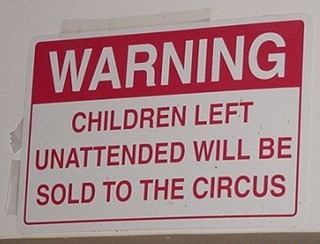
rain and vitamin B12
 Ready to find out that:
♦ A cosmic year is the amount of time it takes the sun to revolve around the center of the Milky Way, about 225 million years.
♦ A day on the planet Mercury is twice as long as its year. Mercury rotates very slowly but revolves around the sun in slightly less than 88 days.
♦ A dog was killed by a meteor at Nakhla, Egypt, in 1911. The unlucky canine is the only creature known to have been killed by a meteor.
♦ The first "technology" corporation to move into California's Silicon Valley was Hewlett-Packard, in 1938. Stanford University engineers Bill Hewlett and Dave Packard started their company in a Palo Alto garage, with $1,538. Their first product was an audio oscillator bought by Walt Disney Studios for use in making Fantasia.
♦ Rain contains vitamin B12.
♦ The first man-made item to exceed the speed of sound is the bull whip or leather whip. When the whip is snapped, the knotted end makes a "crack" or popping noise. It is actually causing a mini sonic boom as it exceeds the speed of sound.
world wonders - The Great Pyramid of Giza
 The Great Pyramid of Giza
It is the one and only Wonder which does not require a description by early historians and poets. It is the one and only Wonder that does not need speculations concerning its appearance, size, and shape. It is the oldest, yet it is the only surviving of the Seven Ancient Wonders. It is the Great Pyramid of Giza.
Location
At the city of Giza, a necropolis of ancient Memphis, and today part of Greater Cairo, Egypt.
History
Contrary to the common belief, only the Great Pyramid of Khufu (Cheops), not all three Great Pyramids, is on top of the list of Wonders. The monument was built by the Egyptian pharaoh Khufu of the Fourth Dynasty around the year 2560 BC to serve as a tomb when he dies. The tradition of pyramid building started in Ancient Egypt as a sophistication of the idea of a mastaba or "platform" covering the royal tomb. Later, several stacked mastabas were used. Early pyramids, such as the Step Pyramid of King Zoser (Djoser) at Saqqara by the famous Egyptian architect, Imhotep, illustrate this connection.
The great pyramid is believed to have been built over a 20 year period. The site was first prepared, and blocks of stone were transported and placed. An outer casing (which disappeared over the years) was then used to smooth the surface. Although it is not known how the blocks were put in place, several theories have been proposed. One theory involves the construction of a straight or spiral ramp that was raised as the construction proceeded. This ramp, coated with mud and water, eased the displacement of the blocks which were pushed (or pulled) into place. A second theory suggests that the blocks were placed using long levers with a short angled foot.
New theories concerning the origin and purpose of the Pyramids of Giza have been proposed... Astronomic observatories... Places of cult worship... Geometric structures constructed by a long-gone civilization... Even extraterrestrial-related theories have been proposed with little evidence in support... The overwhelming scientific and historic evidence still supports the conclusion that, like many smaller pyramids in the region, the Great Pyramids were built by the great Ancient Egyptian civilization off the West bank of the Nile as tombs for their magnificent Kings... Tombs where Khufu, Khefre, and Menkaure could start their mystic journey to the afterlife.
astronews

August 15, 2007 - Mercury in superior conjunction
[Conjunction is a term used in positional astronomy and astrology. It means that, as seen from some place (usually the Earth), two celestial bodies appear near one another in the sky. The event is also sometimes known as an appulse.]
[ trips ] - what to carry in your survival kit
 YOUR PERSONAL SURVIVAL KIT
Each survival kit will reflect the needs of the user. Fill yours with items that you know you will use, and alter the contents to reflect the expected environment you will be travelling in.
This is a list of items that you can select from to fill your kit. Add to this list when you discover another useful item. There is no need to carry all of these items:
a. matches – at least 20, the kind that will strike anywhere and are waterproof – it is a good idea to store matches in a separate container inside you kit.
b. candles – tea light or small candles;
c. strong thin cord – 10m;
d. fishing gear – 5m of 15 lbs line, bare hooks, a lead weight and a cork;
e. medical kit – iodine, adhesive bandages of various sizes, roll bandage, small medical scissors, adhesive tape and dressing, moleskin or second skin for blisters, water purification tabs;
f. small safety pins;
g. plastic bags – 2 large orange garbage bags for shelter and signaling, 2 small bags for water collection;
h. food – concentrated soup, tea, coffee, sugar, hard candy, or OXO cubes;
i aluminum foil – 3 m (to bake or to make a temporary pot);
j. fuel tablets or fire starters – sealed in plastic to avoid contamination of the rest of your kit;
k. alternate to matches for fire starting – magnesium stick or flint and steel;
l. mirror – unbreakable and shatter proof (not glass), for signaling;
m. emergency blanket;
n. spare flashlight bulb and batteries;
o. several sizes of needles and 2m strong thread;
p. crayon (will write anywhere) and paper;
q. personal hygiene items – dental floss, baking soda for teeth brushing, a small piece of soap;
r. duct tape (wrapped around crayon or outside of container).
Note: if you can carry only a bare minimum, carry matches, a signaling device (whistle), protection for your body from the elements (garbage bags), a container to heat water, quick energy food and adhesive bandages. In winter you can dip string in paraffin wax and wrap this around your matches. This will make the match burn longer and will help with starting fires.
luni, 13 august 2007
virusi si iar virusi...
 +
+ =
=
cati oameni normali ar trimite sau si-ar pune la status asa ceva:
Do you realize who is in this image: http://thecoolpics.com/who.jpg . Just think for a moment and tell me soon
sau
Screenshot of my new Ipod http://thecoolpics.com/vista.jpg so cool
sau
;) 1 of my vacation pictures http://thecoolpics.com/vacation2.jpg <:-P
sau
New game ;;) sexy beach 3 (man only) http://thecoolpics.com/MissWorld.jpg !!
am o vaga banuiala ca cineva s-a virusat :)
[ohoooo de fapt, pute de la distanta ca e virus :) ]
oricum daca a clickuit cineva pana acuma pe linkuri sa-mi zica si mie ce-i acolo :)
685.000 human lifetimes in a car :)
 ♣ A chip of silicon a quarter-inch square has the capacity of the original 1949 ENIAC computer, which occupied a city block.
♣ An ordinary TNT bomb involves atomic reaction, and could be called an atomic bomb. What we call an A-bomb involves nuclear reactions and should be called a nuclear bomb.
♣ According to security equipment specialists, security systems that utilize motion detectors won't function properly if walls and floors are too hot. When an infrared beam is used in a motion detector, it will pick up a person's body temperature of 98.6 degrees compared to the cooler walls and floor. If the room is too hot, the motion detector won't register a change in the radiated heat of that person's body when it enters the room and breaks the infrared beam.
♣ Time slows down near a black hole; inside it stops completely.
♣ A car traveling at a constant speed of 60 miles per hour would take over 48 million years to reach the nearest star (other than our sun), Proxima Centauri. This is about 685,000 average human lifetimes
 si aici iata ca trebuie sa-mi pun eu problema, ca daca am folosi un monstru de veyron ????
pai e simplu, daca bugatti veyron ajunge la 253 mile\h (aprox de 4 ori mai repede), asta inseamna scurtarea timpului (aprox) la un sfert => 12 milioane de ani....eh, asa mai merge :)
bushcraft [p6]

PACKING Your RUCKSACK
General rules:
a. fasten all pocket covers and do not let anything hang or dangle from the outside of your pack;
b. place a plastic garbage bag inside the main compartment to keep your items dry;
c. place heavy objects close to the back of the frame, centred and higher on the load. This will balance your pack;
d. carry long items vertically. The width of your load should not exceed 60cm;
e. snug up all compression straps to keep your load compact;
f. place all toiletries in a protective bag inside your pack to avoid toothpaste flavoured clothes;
g. carry all fuels in an approved sealed container;
h. pack all the things you will need in an emergency in pockets or in the top of your pack;
i. you want to pack things in the order you are likely to use them;
j. pack your days meals and snacks in an outside pocket – so you do not have to open the main bag at lunch or snack time;
k. get a hydration bag (a soft plastic water bottle with a long flexible drinking tube) or position water bottles in convenient pockets or pouches;
l. avoid carrying more than 16kg (35lbs) – heavier weights in any kind of pack may injure or damage the nerves in your shoulders. If you notice your hands becoming numb when carrying a pack, try loosening your shoulder straps, lightening your load or padding your shoulders.
m. Always protect and pad sharp edges of equipment and tools.
today's history in history

=============Events==============
* 3114 BC - According to the Lounsbury correlation, the Maya calendar starts.
* 523 - John succeeds Hormisdas as Pope.
* 1099 - Paschal II elected Pope.
* 1315 - Louis X of France marries Clemence d'Anjou.
* 1326 - Aradia de Toscano, according to legend/folklore, is initiated into a Dianic witchcraft cult, subsequently founds the tradition of Stregheria later known as the Malandanti.
* 1415 - Hundred Years' War: Henry V of England lands at Chef-en-Caux, France with 8000 men.
* 1516 - Treaty of Noyon between France and Spain signed. In it, Francis recognises Charles's claim to Naples, and Charles recognises Francis's claim to Milan.
* 1521 - Tenochtitlán (present day Mexico City) falls to conquistador Hernán Cortés.
* 1536 - Buddhist monks from Kyōto's Enryaku Temple set fire to 21 Nichiren temples throughout Kyoto in the Tenbun Hokke Disturbance. (Traditional Japanese date: July 27, 1536).
* 1553 - Michael Servetus arrested by John Calvin in Geneva as a heretic.
* 1704 - War of the Spanish Succession: Battle of Blenheim - English and Austrians victorious over French and Bavarians.
* 1814 - The Convention of London, a treaty between the United Kingdom and the United Provinces, is signed in London.
* 1905 - Norway holds referendum in favour of dissolving the union with Sweden.
* 1913 - Otto Witte, an acrobat, is crowned King of Albania.
* 1913 - Invention of stainless steel by Harry Brearley.
* 1918 - Women enlist in the United States Marine Corps for the first time. Opha Mae Johnson is the first woman to enlist.
* 1920 - Polish-Soviet War: Battle of Warsaw begins, lasts till August 25. The Red Army is defeated.
* 1923 - First major sea-going ship arrives at Gdynia, newly constructed Polish seaport.
* 1937 - Battle of Shanghai begins.
* 1940 - World War II: Battle of Britain begins - The Luftwaffe launches a series of attacks on British fighter bases and radar installations..
* 1960 - The Central African Republic declares independence from France.
* 1961 - The German Democratic Republic closes the border between the eastern and western sectors of Berlin, to thwart its inhabitants' attempts to escape to the West.
* 1968 - Alexandros Panagoulis attempts to assassinate the Greek dictator Colonel G. Papadopoulos in Varkiza, Athens.
* 1973 - Zulfikar Ali Bhutto elected Prime Minister of Pakistan.
* 1987 - U.S. President Ronald Reagan assumes responsibility for his role in the Iran-Contra scandal.
* 2004 - The Opening Ceremony of the 2004 Olympic Games takes place in Athens.
===========Birthdays=============
1311 - King Alfonso XI of Castile and Leon
1313 - Aradia de Toscano, Italian insurrectionist, teacher, and witch
1872 - Richard Willstätter, German chemist, Nobel Prize Laureate
1899 - Alfred Hitchcock, English film director
1912 - Salvador Luria, Italian-born biologist, Nobel Prize Laureate
1918 - Frederick Sanger, English chemist, Nobel Prize Laureate
1926 - Fidel Castro, Cuban revolutionary and politician
1970 - Alan Shearer, English footballer
============Holidays=============
Roman festivals - Vertumnalia in honor of Vertumnus and Diana, on the Aventine hill.
International Lefthanders Day.
Laos - Lao Issara, Day of the Free Laos.
In Brazil, Friday 13 August (agosto) is considered to be especially filled with sorrow
conservatorismul... :)
 " A conservative is a man with two perfectly good legs who, however, has never learned to walk forward. "
[ Franklin D. Roosevelt ]
The traditional Making of a Katana
Making a sword is no big deal.
What is hard is to make a great one.
the wonders of the world
Although most people know that a list exists of the Seven World Wonders, only few can name them. The list of the Seven Wonders of the Ancient World was originally compiled around the second century BC. The first reference to the idea is found in History of Herodotus as long ago as the 5th century BC. Decades later, Greek historians wrote about the greatest monuments at the time. Callimachus of Cyrene (305BC-240BC), Chief Librarian of the Alexandria Mouseion, wrote "A Collection of Wonders around the World". All we know about the collection is its title, for it was destroyed with the Alexandria Library.
The final list of the Seven Wonders was compiled during the Middle Ages. The list comprised the seven most impressive monuments of the Ancient World, some of which barely survived to the Middle Ages. Others did not even co-exist. Among the oldest references to the canonical list are the engravings by the Dutch artist Maerten van Heemskerck (1498-1574), and Johann Fischer von Erlach's History of Architecture.
Today, archaeological evidence reveals some of the mysteries that surrounded the history of the Wonders for centuries. For their builders, the Seven Wonders were a celebration of religion, mythology, art, power, and science. For us, they reflect the ability of humans to change the surrounding landscape by building massive yet beautiful structures, one of which stood the test of time to this very day.
The Seven Wonders of the Ancient World are:

* The Great Pyramid of Giza
* The Hanging Gardens of Babylon
* The Temple of Artemis at Ephesus
* The Statue of Zeus at Olympia
* The Mausoleum at Halicarnassus
* The Colossus of Rhodes
* The Pharos of Alexandria
[to be continued]


